Air Handler Closets and Central Returns in Florida Homes
Many Florida homes have the air handler in a hallway closet behind a big return grille. How that setup works, what to keep out of it and what a cleaning covers.
In a lot of Florida homes, there's a closet in the hallway or near the garage that isn't really a closet. Behind a louvered door or a large grille sits the air handler, the indoor half of your AC or heat pump system. The big grille is the return, where the system pulls air back in, and the filter is often right behind it.
If your Jacksonville home is set up this way, a few simple habits keep it working the way it should. Here's how it works and what a duct cleaning does and doesn't cover.
How a central return works
Your AC is a loop. Supply vents in each room deliver cool air. Return grilles pull air back to the air handler, through the filter, over the cooling coil and out again.
Many Florida homes use one or two large central returns instead of a return in every room. The grille may be:
- On the wall or ceiling of a hallway next to the air handler closet
- In the closet door itself, often a louvered or grille-covered door
- On a platform the air handler sits on, with the filter slot below it
In some homes, the closet itself is part of the return path, so the air pulled into the system passes through the closet first.
What to keep out of the closet
Because the air handler pulls air from around it, the closet shouldn't double as storage. Things that commonly end up there and shouldn't:
- Boxes, paper and cleaning supplies. They block airflow and can shed dust and fibers right into the return.
- Chemicals, paint and pool supplies. Anything with fumes can be drawn into the system and circulated through the house.
- Laundry and linens. They collect dust and lint, and block access to the filter.
- Items leaning on the grille or door. Anything that blocks the return makes the system work harder to pull air.
Keep the closet empty except for the equipment, and leave enough room to change the filter and for an HVAC technician to reach the unit.
The filter is the main job
With a central return, the filter is doing almost all the work of keeping household dust out of the system. A few points:
- Know your filter size and where it goes. Some homes have the filter behind the hallway grille, others at the air handler itself.
- Change it on schedule. The EPA recommends the highest-efficiency filter your HVAC system's manufacturer allows, changed regularly.
- Check for gaps. The EPA also recommends making sure there are no gaps around the filter holder that let air bypass it. Unfiltered air goes straight to the coil and the ducts.
- Look at the grille itself. If it's fuzzy with dust a week after you clean it, the system is pulling in a lot of household dust.
Moisture and the drain: HVAC territory
The air handler's cooling coil removes moisture from the air, and that water drains away through a condensate line. In a humid climate, that drain matters. The EPA notes that condensation on or near cooling coils is a major factor in moisture problems in duct systems.
Watch for water around the base of the air handler, rust on the drain pan, a musty smell in the closet or water stains on the ceiling or floor nearby. Those are signs to call an HVAC contractor. The coil, drain pan, condensate line and blower are equipment parts, not part of a duct cleaning. If you see what looks like mold, have a qualified professional assess it.
What a duct cleaning covers
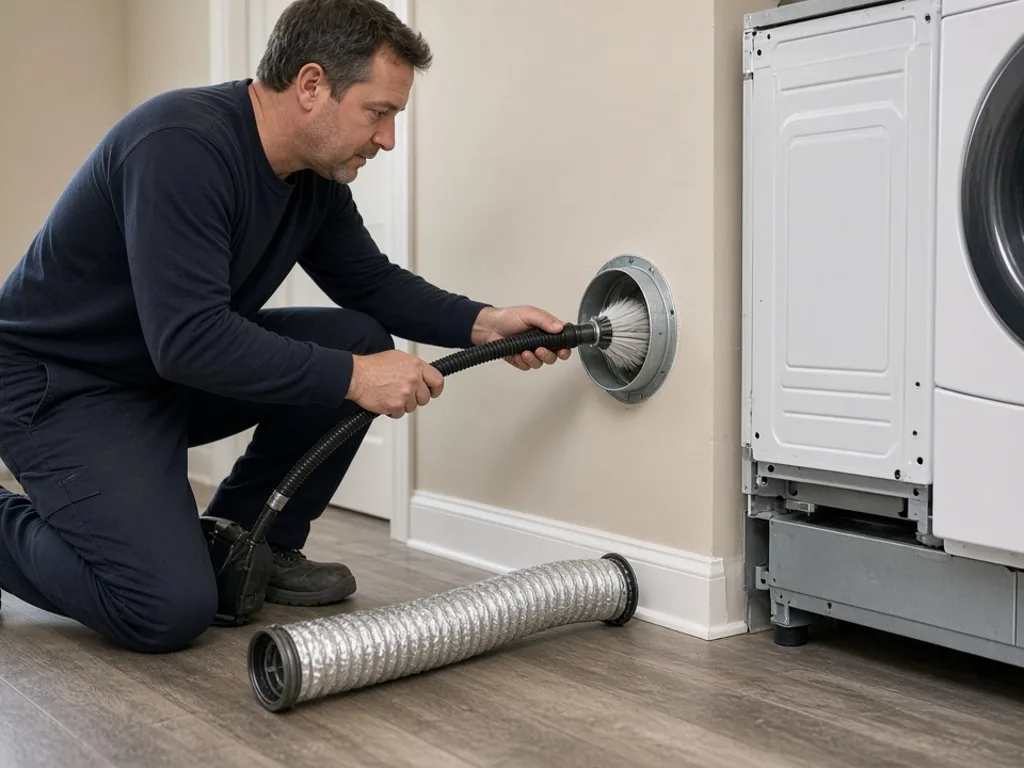
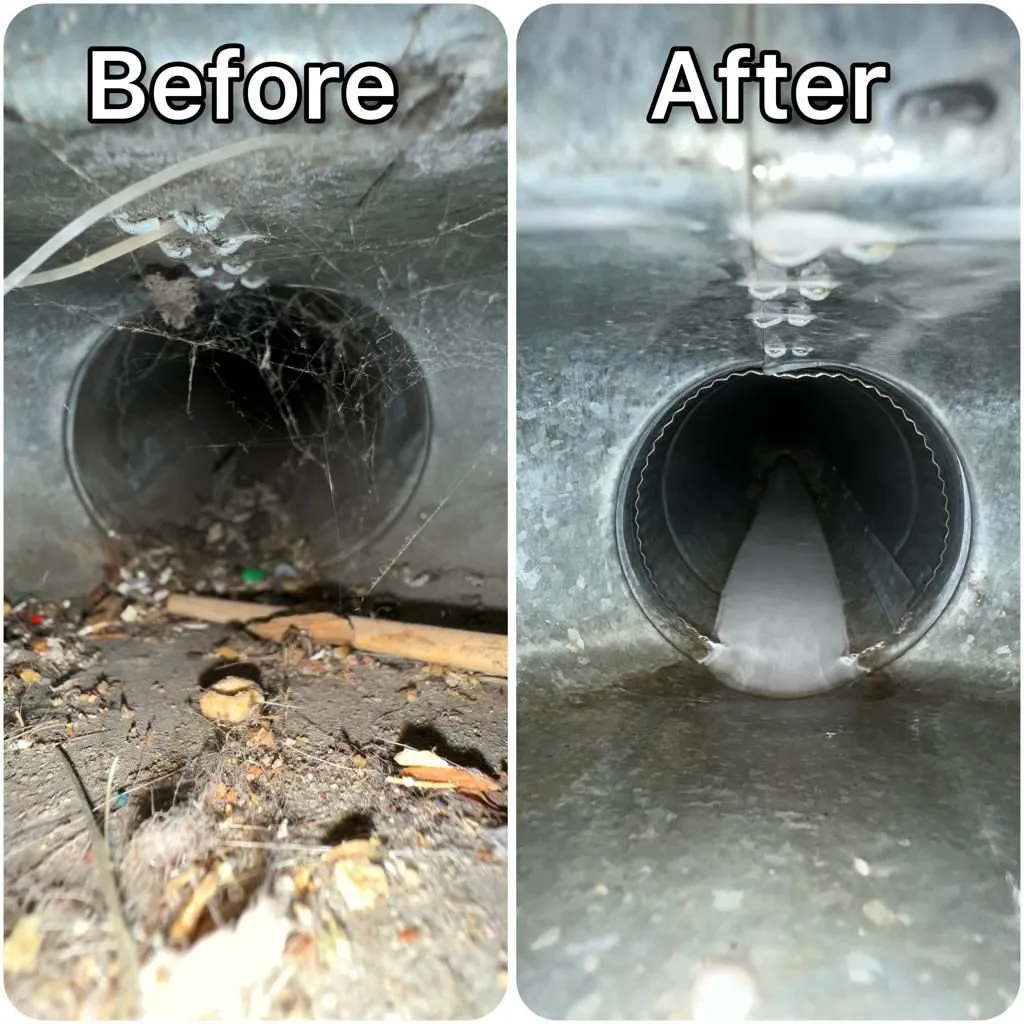
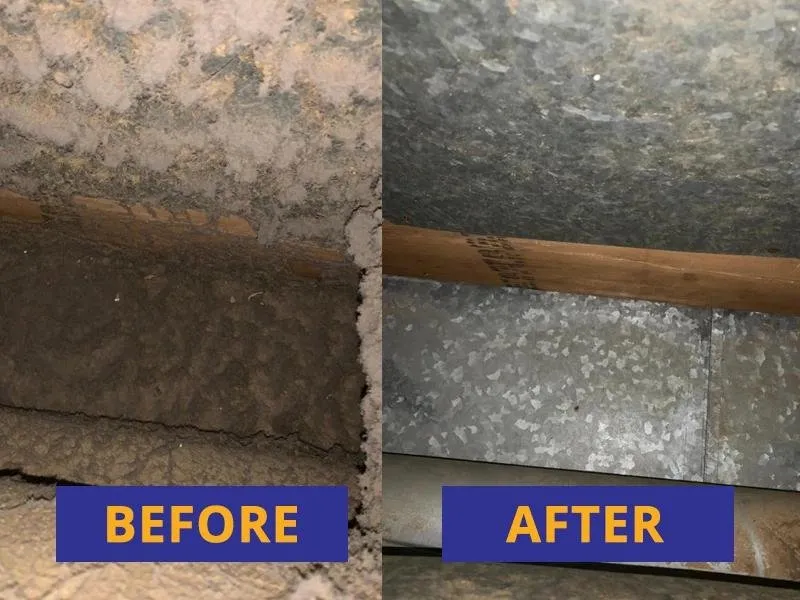
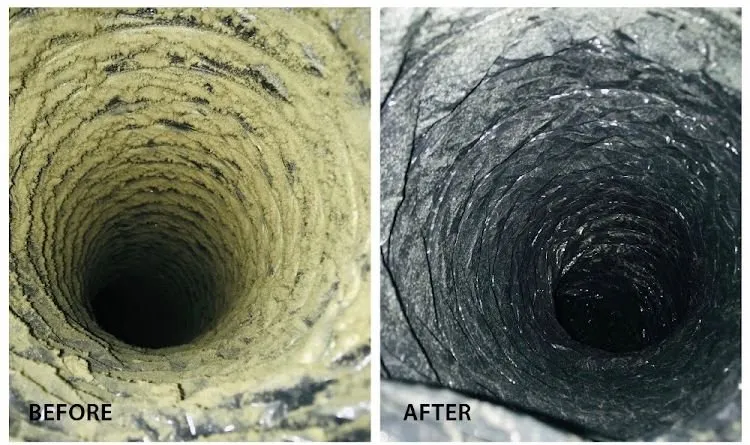
Our air duct cleaning covers the supply and return ducts and the registers and grilles, including the central return. We use rotating brushes to loosen buildup and a HEPA-filtered vacuum to remove it. It's $199 covering up to 10 vents, with $29 added for every vent beyond 10. If a few runs need extra attention, deep duct cleaning is $59.99 per vent. The full price list is on our pricing page.
When you count vents for an estimate, count each supply register and each return grille. A large central return counts as one.
A cleaning makes sense when you see dust blowing from supply registers, heavy buildup inside the return when you lift the grille, or debris from a recent project. The EPA lists excessive dust and debris and particles released from supply registers among the situations where duct cleaning should be considered.
A quick monthly check
- Open the closet and look for water, rust or musty smells.
- Clear anything stored inside.
- Check the filter and change it if it's due.
- Vacuum the return grille.
Not sure if we cover your neighborhood? Check our service areas.
If your central return fills up fast or the registers are blowing dust, request a free estimate from Safe Air Duct Cleaning Jacksonville.
Sources
- Should You Have the Air Ducts in Your Home Cleaned?, U.S. EPA, last updated February 19, 2026